
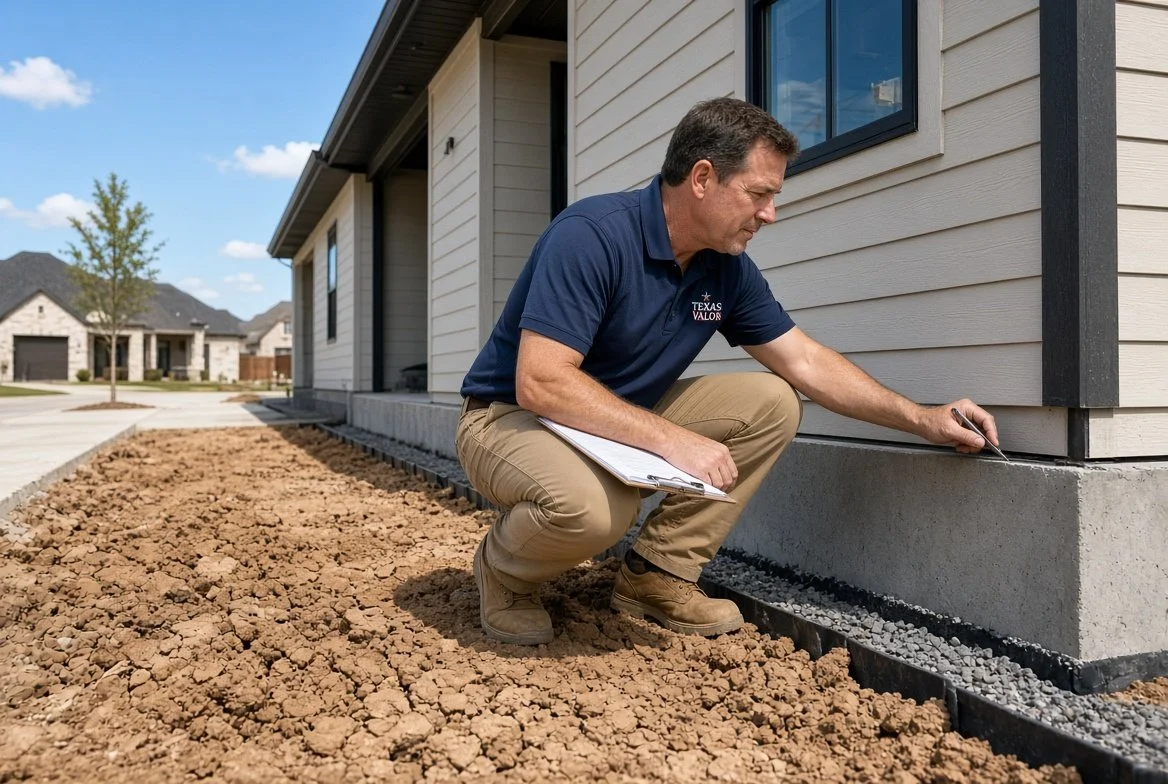
Most buyers of brand-new homes in Texas focus on the pre-closing inspection and then relax once the keys are in hand. That is a mistake. Nearly every production builder provides a limited one-year warranty covering workmanship and materials. After month 12, the bulk of that coverage disappears and any remaining issues become your expense.
An independent 11-month warranty inspection—ideally scheduled in month 10 or early month 11—gives you a documented punch list while the builder is still obligated to correct covered defects. In Central Texas, where expansive clay soils, intense summer heat, and heavy seasonal rains are the norm, the first year is when many latent problems finally reveal themselves.
Why Timing Matters in This Region
Clay soils expand when wet and shrink during dry spells. Even a well-built slab can show subtle movement after a full cycle of Texas weather. Doors that stick, hairline drywall cracks at corners, gaps in exterior caulk, or slight floor slope often appear only after the home has lived through a summer. Drainage problems that looked acceptable at closing can reverse once the soil settles, sending water toward the foundation instead of away from it.
HVAC systems that seemed fine in mild weather may reveal inadequate airflow, improper condensate drainage, or missing insulation once they run hard for months. Roof flashing, attic insulation gaps, and exterior sealants also degrade or show installation shortcuts under real-world conditions. An independent inspector who works only for you will document these items with photos and clear descriptions the builder can act on.
What an 11-Month Inspection Typically Covers
A thorough warranty inspection reviews the same major systems as a standard home inspection, with special attention to defects that commonly surface in the first year:
Exterior grading, drainage, and flatwork that may have shifted
Foundation and structural indicators of movement
Roof, attic, insulation, and ventilation
HVAC performance, condensate management, and duct sealing
Plumbing fixtures, water heater installation (including expansion tanks where required), and visible piping
Electrical safety items such as GFCI/AFCI protection and proper terminations
Interior finishes, doors, windows, and caulking that have moved with the structure
The goal is not to create an endless list of cosmetic preferences. It is to identify legitimate workmanship and material defects still covered under the warranty so you can submit them in writing before the deadline.
How to Protect Yourself
Mark your closing date and set a reminder for month 9 or 10. Schedule the inspection early enough to receive the report, submit the claim, and allow the builder time to inspect and repair before the warranty expires. Review your specific warranty documents for notice requirements; many builders require written notice and give themselves a window to respond. An independent report with photos strengthens your position far more than a casual walkthrough with the builder’s representative.
New does not mean defect-free, and city code inspections check only minimum compliance, not long-term workmanship. In the Austin, Georgetown, and surrounding Central Texas markets, an 11-month inspection is one of the highest-return steps a new-home owner can take.
If you are approaching the end of your first year in a new build, Texas Valor Inspection Services can provide a clear, independent assessment before your builder’s coverage ends. Contact us at (833) 898-2567 or visit texasvalor.com to schedule.